Toddler Nightmares: Calm Scripts & Bedtime Fixes
Nightmares vs. night terrors: why it matters
Toddlers can have intense nighttime episodes that look similar, but the right response depends on what’s happening. Nightmares typically show up in the second half of the night (often closer to morning). A toddler with a nightmare usually wakes fully, seeks you out, and can be comforted. They may even recall a detail or two the next day.
Night terrors, on the other hand, often happen earlier in the night. A child may cry, thrash, or look awake—yet be hard to console and not truly “with you.” Most toddlers won’t remember the episode the next morning. With night terrors, the safest approach is usually to protect them from injury, keep the environment calm, and wait for it to pass with minimal interaction.
If episodes are frequent, violent, or you notice breathing concerns (snoring with pauses, gasping), it’s worth discussing with your pediatrician. For additional guidance on children’s sleep, you can also reference the American Academy of Pediatrics (HealthyChildren.org) or the Sleep Foundation.
A calm, repeatable plan for the moment your toddler wakes up scared
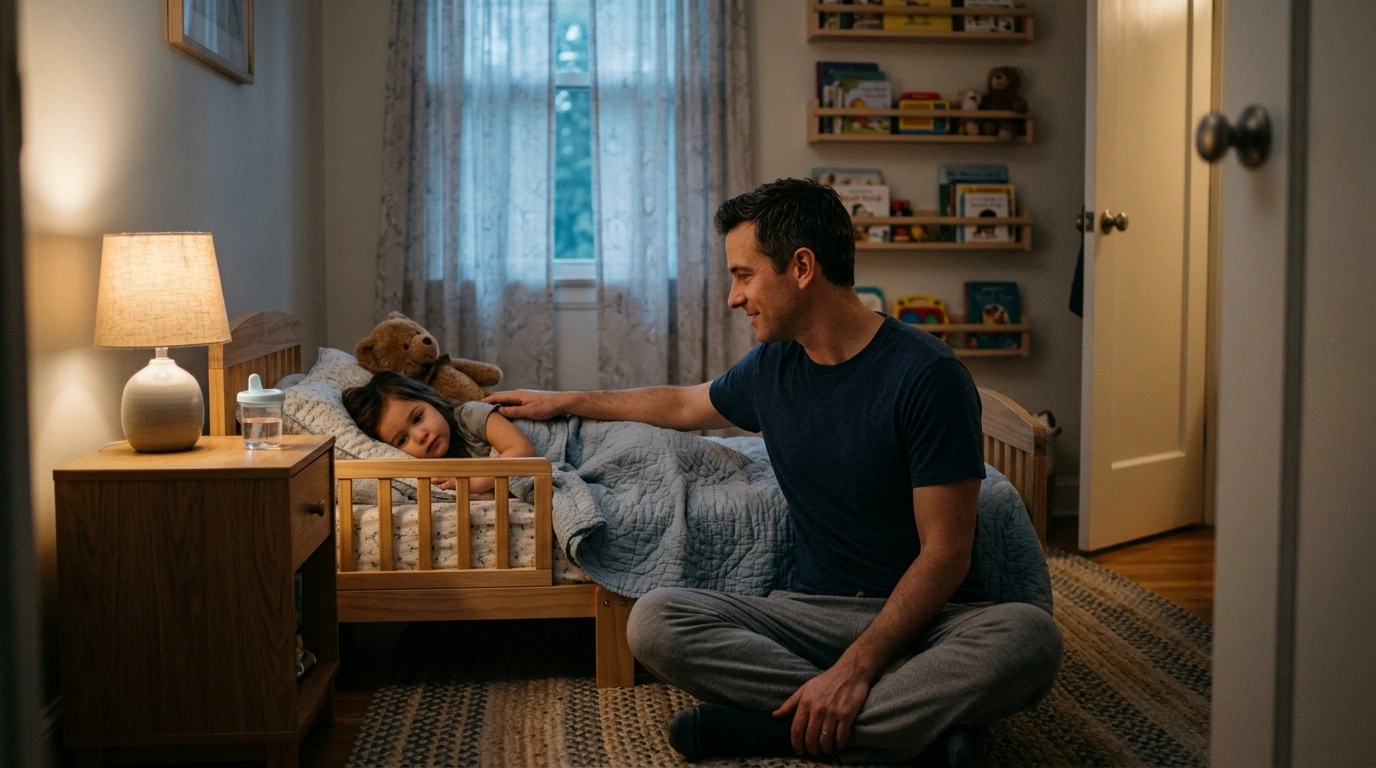
Nightmares feel urgent, but the fastest path back to sleep is often the simplest: show up calmly, confirm safety, and keep it short. The goal is comfort without accidentally turning 2:00 a.m. into a full reset.
- Go to them quickly, but keep the lights low and your movements slow.
- Use a steady voice and short phrases: “You’re safe. I’m here. That was a scary dream.”
- Offer the type of comfort your child prefers (cuddle, hand on their back, or sitting nearby).
- Avoid detailed questions about the dream if it ramps up fear; focus on safety and reassurance.
- Help the body calm down: a sip of water, two slow breaths together, or a quick grounding cue (“Tell me three things you can see.”).
- End with a predictable closing script: “Back to bed. I’ll check on you in two minutes.” Then gradually reduce check-ins over time to avoid creating a new wake-up habit.
| Step | What to do | Why it helps |
|---|---|---|
| 1. Arrive calm | Low voice, low light, slow movements | Signals safety; reduces stimulation |
| 2. Name it simply | “That was a scary dream.” | Validates feelings without adding details |
| 3. Reassure safety | “You’re safe at home. I’m here.” | Rebuilds security fast |
| 4. Brief comfort | 30–90 seconds of cuddling or back rub | Soothes without creating a long wake window |
| 5. Reset the room | Nightlight, favorite lovey, quick blanket tuck | Anchors comfort cues to the bedtime environment |
| 6. Back to sleep plan | Short script + timed check-in if needed | Creates predictable closure and independence |
Common triggers and what to adjust during the day
Nightmares often surge during developmental leaps—when imagination is growing and language is expanding. A few everyday factors can make them more likely:
- Overtiredness: late bedtimes, skipped naps, and irregular schedules can raise the odds of night wakings. Keep sleep windows consistent when possible.
- Big changes: travel, moving homes, a new daycare, or a new sibling can appear at night. Add extra connection time (10–15 minutes of child-led play) during the day.
- Scary media: intense cartoons, “big kid” stories, or overheard news can linger. In the evening, choose familiar, calm content.
- Stress signals: separation anxiety or conflict can heighten nighttime fear. Use simple emotion coaching earlier in the day: name the feeling and offer one coping option.
- Illness or discomfort: congestion, reflux, itchy skin, or teething can fragment sleep and increase distress. If symptoms persist, consult a clinician; general sleep information is also available through NIH MedlinePlus.
Bedtime routine upgrades that reduce scary wake-ups
A toddler’s brain relaxes best when bedtime is predictable and boring (in a good way). Aim for a 20–30 minute routine that ends the same way each night.
- Keep it simple: bath, pajamas, 1–2 books, cuddle, lights out.
- Add one “all-night” safety cue: a dim nightlight, white noise, or an age-appropriate comfort object that stays in bed.
- Do a quick “bravery practice”: choose a calming phrase (“I am safe”), a short comfort song, or a gentle breathing game.
- Use a consistent ending script: predictability reduces uncertainty and bedtime negotiation.
- Offer limited choices: “Two books—this one or that one?” keeps your toddler feeling in control without extending the routine.
What to say (and what to avoid) after a nightmare
Comfort tools that work for many toddlers
A structured bedtime-and-night plan parents can follow
Recommended resources (in stock)
- What to Do When Your Toddler Has Nightmares (ebook) — a parent-friendly reference for the middle-of-the-night moment and daytime prevention.
- Confident Kids Bundle: Nurturing Emotional Strength — supportive activities and tools for ages 3–5 as fears and imagination grow.
When to get professional guidance
FAQ
How long do toddler nightmares last, and when do they peak?
Nightmares often appear in the preschool years and can come in phases, especially during big developmental changes. They tend to worsen with overtiredness, stress, or scary media, and often improve with a steady routine and consistent reassurance; seek help if they’re persistent, frequent, and disruptive.
Should a toddler sleep in the parents’ bed after a nightmare?
Comfort first, then aim to return your toddler to their own bed with a predictable script so bedtime feels safe without creating a new nightly habit. If you need a temporary bridge, timed check-ins or a floor cushion in your child’s room can offer closeness without fully changing the sleep location.
What is the difference between a nightmare and a night terror?
Nightmares usually happen later in the night and your toddler wakes fully, can be comforted, and may remember it. Night terrors often happen earlier, the child may seem awake but is inconsolable and won’t remember it, and the best response is typically safety plus minimal stimulation until it passes.












Leave a comment