Sleep Reset: 7-Day Guided Audio for Deeper Sleep
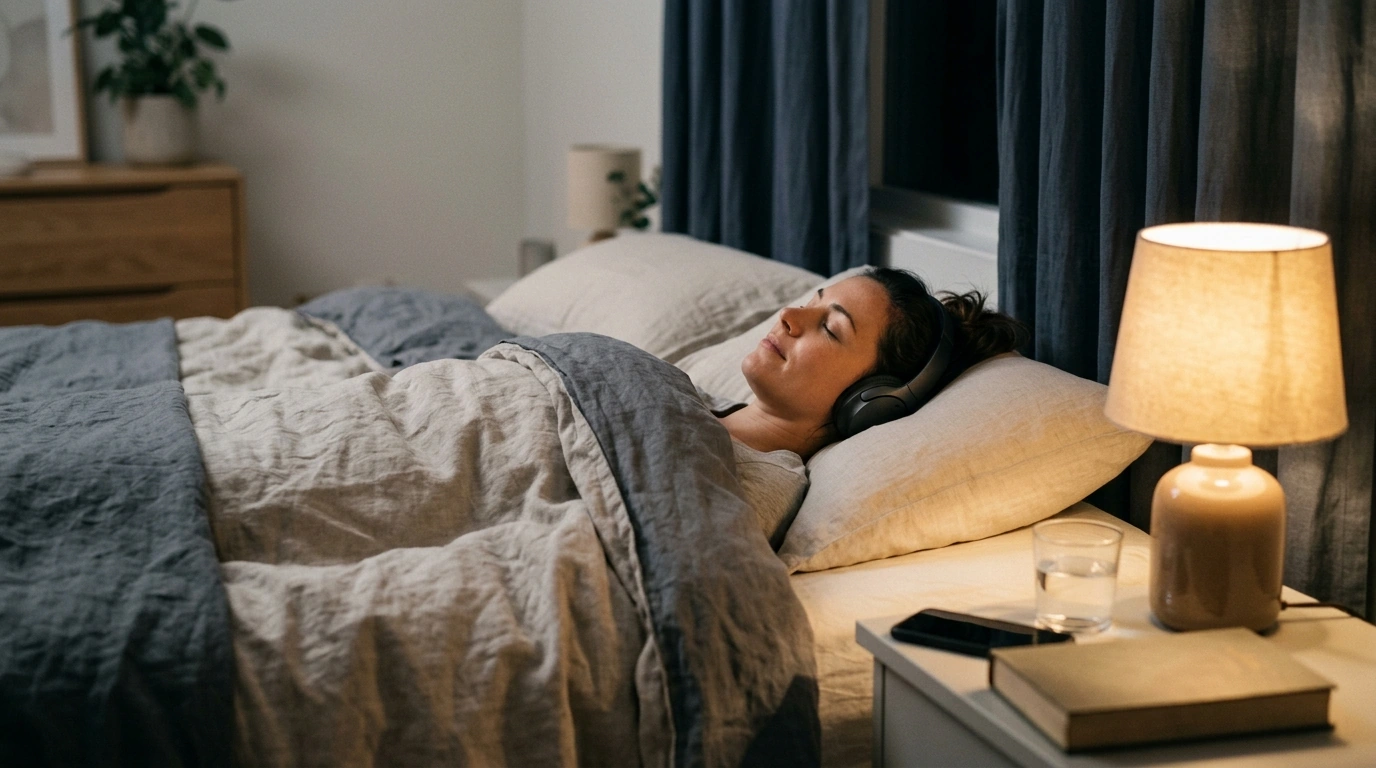
Sleep Reset: A 7-Day Guided Audio Course for Restful Nights
Falling asleep can feel harder when the mind stays busy, the body won’t unwind, or nighttime becomes a cycle of clock-watching. Sleep Reset is a guided audio course built around short daily sessions that ease the nervous system into deep relaxation and support a calmer transition into sleep across a full week.
What Sleep Reset is
Sleep Reset is a guided audio course designed to be used over 7 days, with each day reinforcing a steadier wind-down routine. Instead of asking you to “try harder” to sleep, the sessions focus on deep relaxation and sleep-focused meditation cues that reduce mental chatter and soften physical tension at bedtime.
It’s built for home use: headphones or a speaker, a comfortable position (lying down or supported in bed), and a consistent time window are typically enough. Like most sleep tools, it works best when paired with simple sleep-friendly habits—dim light, reduced late-night stimulation, and a repeatable pre-sleep ritual that signals, “the day is done.”
If you want a clear place to start, you can find the course here: Sleep Reset: Guided Audio Course for Restful Nights – 7-Day Sleep Meditation, Deep Relaxation, Insomnia Relief.
How guided sleep audio helps the body shift into rest
Guided sleep audio can feel deceptively simple, but it supports several “off-ramps” from the cycle of alertness that often keeps people awake.
Attention guidance reduces mental loops
A calm voice and structured cues give your attention an anchor. When the mind has something gentle and predictable to follow, it has fewer open loops to run—less replaying, planning, and negotiating with tomorrow.
Breath and body prompts downshift arousal
Relaxation prompts encourage slower breathing and soften muscle tension in common “holding” zones like the jaw, neck, shoulders, and belly. This shift can help the body move away from a keyed-up state and toward a calmer baseline.
Repetition builds a sleep association
Using the same style of session night after night helps the brain connect the routine with sleepiness. Consistency matters because it creates a familiar pattern: lights dim, audio starts, body relaxes, thoughts settle.
Gentle imagery interrupts clock-watching
Progressive relaxation and calming imagery can reduce the urge to check the time. For many people, clock-watching ramps up frustration and stress, making it harder to drift off again once the mind re-engages.
For more background on healthy sleep habits and what supports sleep quality, see the NHLBI guide to healthy sleep and the Sleep Foundation’s overview of meditation for sleep.
A simple 7-day rhythm to follow
Sleep Reset works best when the week feels realistic rather than rigid. Pick a start time you can actually keep for seven nights, then treat the sessions as a nightly “power-down” cue.
- Keep the timing steady: predictability helps your nervous system recognize the pattern.
- Use low-light conditions: avoid multitasking so your body gets a clear “we’re winding down” signal.
- Let rest count: if sleep doesn’t arrive quickly, continue listening without judgment—relaxation is still progress.
- Track only a few signals: ease of falling asleep, nighttime awakenings, and morning grogginess are enough to notice trends without obsessing.
7-Day Sleep Reset Plan (Example Use)
| Day | Focus | Best time to play | Quick tip |
|---|---|---|---|
| Day 1 | Create a calming baseline | At lights-out | Make the room slightly cooler and dimmer than usual |
| Day 2 | Release body tension | 10–20 minutes before sleep | Try a brief neck/shoulder stretch before starting |
| Day 3 | Quiet racing thoughts | At bedtime | Keep the phone out of reach to avoid checking the clock |
| Day 4 | Deep relaxation | After nighttime wake-ups | Restart the audio if you wake and feel alert |
| Day 5 | Stabilize the wind-down routine | Same time as prior nights | Repeat the same pre-sleep steps in the same order |
| Day 6 | Build confidence around sleep | At bedtime | Replace “trying to sleep” with “allowing rest” |
| Day 7 | Make it sustainable | At bedtime or naps if needed | Choose 1–2 nights per week to keep the practice going |
Who it’s most helpful for
Guided sleep audio can be a strong fit when you want support that feels structured but not complicated.
How to get the best results at home
If sleep problems are persistent and affecting daytime life—or if there’s loud snoring with choking/gasping—clinical guidance matters. The American Academy of Sleep Medicine has an overview of insomnia and when to seek help.
What’s included and how it fits into a routine
The sessions can be used at bedtime, during a middle-of-the-night reset, or as a calming pre-sleep bridge when you’re coming down from a demanding day. For many households, reducing evening tension can also support better sleep; if nighttime stress comes from unresolved conversations, a structured communication tool can help keep evenings calmer: Conflict-Resolution Workbook for Couples | Printable Relationship Communication eBook | Improve Listening, Resolve Arguments, Rebuild Trust.
FAQ
How long should the course be used to notice a difference?
Many people notice changes within a week when sessions are used consistently at about the same time each night. After the first week, continuing with select sessions 1–3 nights per week can help maintain the routine, especially during stressful periods.
Can it be used if waking up in the middle of the night is the main issue?
Yes. Restart a session at a low volume after awakenings and focus on relaxing rather than forcing sleep; keeping the room dark and avoiding screens makes it easier to drift back off.
Is this a replacement for medical care for insomnia?
No. It supports relaxation and a steadier wind-down routine, but it isn’t medical treatment; chronic insomnia, suspected sleep apnea, or severe daytime impairment should be discussed with a clinician.












Leave a comment