Minimalist Packing Planner: Carry-On Checklist That Works
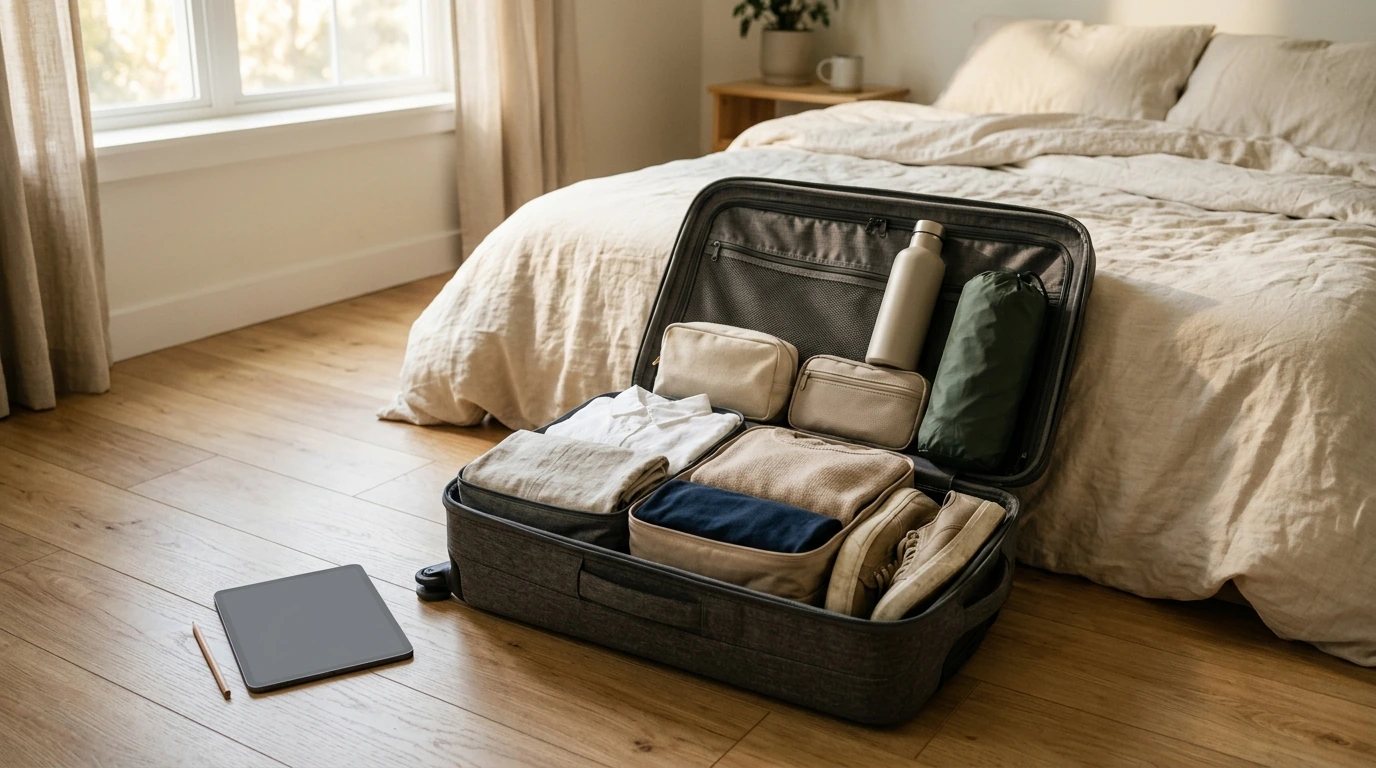
Minimalist Travel Packing Planner: Pack Light, Stay Prepared, Travel Stress-Free
Packing light is less about owning fewer things and more about making better decisions—before the suitcase opens. A minimalist packing plan reduces overpacking, prevents last-minute purchases, and keeps essentials easy to find on the road. The goal is a simple system you can repeat: a reliable packing template, a few trip-specific add-ons, and a quick final check that prevents the most disruptive “forgot it” moments.
Why minimalist packing works (and why it feels easier)
Minimalist packing removes the mental load that makes travel prep feel chaotic. Instead of reinventing your list for every trip, you start with a proven baseline and adjust only what actually changes.
- Lower decision fatigue: you choose from a short, tested list rather than starting from scratch.
- Better mobility: a lighter bag means easier transfers, fewer aches, and often fewer baggage fees.
- More outfit flexibility: coordinated pieces create multiple looks through simple layering.
- Fewer lost items: less gear means less to track in hotels, rentals, and airports.
- A repeatable routine: wash, restock, update the list, and you’re ready for the next departure.
The 3-step minimalist packing method
Step 1 — Define constraints
Start with the facts: trip length, activities (work, hiking, beach), laundry access, expected weather range, and baggage limits (personal item vs carry-on). If you’re flying, verify liquid rules and screening basics using the TSA “What Can I Bring?” tool before you decant toiletries.
Step 2 — Build a capsule
Choose a base color palette plus 1–2 accent colors. Then pick layers that can move across day/night and indoors/outdoors (a mid-layer, a weather layer, and pieces that work with your main bottoms). This is where “pack less” turns into “wear more combinations.”
Step 3 — Pack by system, not by item
Organize your bag into systems: clothing capsule, footwear, toiletries, tech, documents, and health/safety. Each system gets its own pouch or packing cube so nothing migrates. Use a one-in, one-out rule—if you add something new, remove something that serves a similar role.
Before you zip up, do a 2-minute scan for the biggest trip-stoppers: chargers, ID/passport, payment cards, daily meds, and a weather layer.
Minimalist packing checklist by trip type (editable starting point)
Start with a baseline and adjust quantities based on laundry and climate swings. Favor re-wearable pieces (quick-dry tops, wrinkle-resistant bottoms) and keep footwear tight: one walking pair plus one “occasion” pair or sandals covers most itineraries.
| Category | Weekend (2–3 days) | 1 Week (5–7 days) | Notes for staying light |
|---|---|---|---|
| Tops | 2–3 | 4–5 | Choose quick-dry, mix-and-match colors; re-wear outer layers |
| Bottoms | 1–2 | 2 | One casual + one dressier/technical option covers most plans |
| Layers | 1 mid-layer | 1 mid-layer + 1 outer | Add a packable rain shell if forecast is uncertain |
| Underwear/socks | 3 | 5–7 (or 4 + laundry) | Prioritize comfort; consider sink-wash options |
| Shoes | 1 pair | 1–2 pairs | Wear the bulkiest pair in transit |
| Toiletries | Essentials only | Essentials only | Use travel sizes; keep duplicates out of the bag |
| Tech | Phone + 1 charger | Phone + 1 charger + small extras | One cable system (USB-C/Lightning) reduces clutter |
| Documents | ID + payment | ID + payment + confirmations | Store digital copies securely; keep originals accessible |
Smart add-ons that don’t add bulk
- Laundry mini-kit: detergent sheets + a sink stopper can replace multiple “backup” outfits.
- Micro first-aid: a few bandages, blister care, and personal essentials—not a bulky full kit.
- Reusable empty bottle + a snack: reduces overpriced airport purchases with minimal space.
- Packable tote/day bag: useful for day trips while the main bag stays streamlined.
- One “problem-solver” layer: packable rain shell or lightweight insulation, depending on conditions.
For destination-specific health and packing considerations (including medications and regional guidance), check CDC Travelers’ Health. If you’re unsure about airline size/weight policies, use your carrier’s rules as the primary reference and cross-check general guidance at IATA’s baggage resources.
How a digital packing planner keeps the system repeatable
A digital planner turns minimalist packing into a reusable workflow instead of a last-minute scramble.
- Templates save time: start from a base list and only tweak for weather, activities, and trip length.
- Checkboxes prevent misses: track laundry, charging devices, refilling toiletries, and more.
- Modular packing: swap in a beach module, business module, or cold-weather module without rewriting everything.
- One place for trip prep: reservations, must-pack items, and reminders can live beside the list.
- Post-trip improvement: note what went unused and what was missing so the next pack gets lighter.
If you want a ready-made structure that’s easy to reuse, see Minimalist Travel Packing Planner | Digital Packing Guide for Light, Smart & Stress-Free Trips.
Common minimalist packing mistakes (and quick fixes)
Quick-start: set up a packing template in 10 minutes
To keep travel spending as streamlined as your suitcase, pair your packing routine with a simple money plan like Budgeting Like a Pro: Complete eBook – Personal Finance Planner.
FAQ
How do minimalist travelers decide what to pack for a week?
Use a capsule wardrobe: 2 bottoms, 4–5 tops, 1–2 layers, and a strict shoe limit. Adjust counts based on laundry access and weather, and prioritize mix-and-match, quick-dry fabrics.
Is a digital packing planner better than a paper checklist?
Digital planners are easier to reuse, duplicate for new trips, and edit quickly when plans change. Templates, modules, and checkboxes also reduce missed essentials and last-minute stress.
What are the true essentials that should never be skipped?
Identification (passport/ID), a payment method, daily medications, a phone, and a reliable charger are the core non-negotiables. Add a weather-appropriate layer and a small hygiene kit.










Leave a comment