Calm in Motion: Daily Micro-Practices to Reset Stress
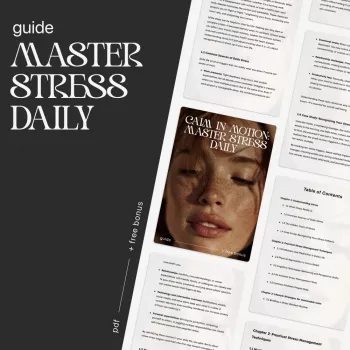
Calm in Motion: A Daily Practice for Stress Relief, Focus, and Inner Balance
Stress builds when the day moves faster than the nervous system can recover. When there’s no space between meetings, messages, errands, and decisions, the body can stay in a “revved up” state long after the moment has passed. A practical way to reduce the impact is to pair mindfulness with small, repeatable actions that fit real schedules—during transitions, between tasks, and before sleep. The goal isn’t perfect calm; it’s reliable recovery that helps you return to steady focus more quickly and more often.
What daily stress looks like (and why it lingers)
Stress becomes “sticky” when recovery time is missing. Back-to-back obligations, constant notifications, and rushed meals can keep the body in a prolonged activated state, even if nothing is “wrong.” Over time, that activated baseline starts to feel normal—until it shows up as symptoms you can’t ignore.
- Common patterns include racing thoughts, irritability, tension headaches, shallow breathing, difficulty concentrating, and sleep that feels unrefreshing.
- Stress triggers aren’t only big events—micro-stressors (late replies, clutter, multitasking, uncertain plans) compound throughout the day.
- A helpful reframe: the goal isn’t to eliminate stress, but to improve recovery so the body returns to calm more quickly and more often.
For a deeper overview of how stress affects mind and body, the American Psychological Association (APA) stress resources are a solid starting point.
A simple daily framework: regulate, refocus, reset
When stress is high, trying to “think your way out” often backfires. A better sequence is to calm the nervous system first, then aim your attention, then add short resets throughout the day.
- Regulate (1–3 minutes): downshift the stress response using breath, grounding, or muscle release before trying to push through.
- Refocus (2–10 minutes): choose one next action, reduce cognitive load, and create a narrow target for attention.
- Reset (30–90 seconds, repeated): add mini-pauses after transitions—finishing a task, entering the car, closing a laptop, starting dinner.
- Consistency beats intensity: several brief regulation moments daily can be more sustainable than one long session done occasionally.
Micro-practices for calm in motion (use anywhere)
These tools are designed for real life: standing in a hallway, waiting for a call to connect, sitting in the car, or walking from one room to another. Pick one and repeat it until it feels familiar.
Physiological sigh (30–60 seconds)
Inhale through the nose, then “top up” with a second short inhale. Follow with a long, slow exhale. Repeat 2–4 rounds. This can quickly reduce tension and take the edge off reactivity.
5-4-3-2-1 grounding (1–2 minutes)
Name 5 things you see, 4 you feel, 3 you hear, 2 you smell, and 1 you taste. The point isn’t perfection; it’s shifting attention away from spirals and back into the present.
Release-and-drop (60 seconds)
Tense shoulders and hands for 5 seconds, then release fully. Repeat 3 rounds. This helps undo the “bracing” that builds during stress without you noticing.
Walking reset (2–5 minutes)
Walk at a comfortable pace and match steps to a slow exhale. Keep attention on the soles of your feet to reduce rumination and mental replay.
| Moment | What to do (1–3 minutes) | What it helps |
|---|---|---|
| Before a difficult conversation | Physiological sigh + unclench jaw and hands | Reduces reactivity and sharpens listening |
| Mid-afternoon slump | 2-minute walk + 10 slow exhales | Boosts clarity without over-caffeinating |
| After a stressful message | 5-4-3-2-1 grounding | Interrupts worry loops and catastrophizing |
| Before sleep | Progressive muscle release from face to feet | Signals safety to support wind-down |
Mindfulness that fits busy days (not just meditation sessions)
Mindfulness doesn’t have to mean a long sit. It can be “micro-attention” that turns ordinary moments into nervous system cues—short enough to repeat, strong enough to matter.
For background on mindfulness and meditation research, see the National Center for Complementary and Integrative Health (NCCIH).
AI-assisted stress relief (safe, supportive ways to use it)
A 7-day routine to make calm automatic
If you want additional stress-management basics and lifestyle guidance, the Mayo Clinic stress management overview is a helpful reference.
Digital guide option for structured practice
- Calm in Motion: Master Stress Daily (digital download) offers short, repeatable practices and AI-friendly prompts designed for busy schedules.
- For relationship-related stress and recurring arguments, Conflict-Resolution Workbook for Couples provides structured exercises to improve listening and repair patterns.
- For money stress and decision overload, Budgeting Like a Pro: Complete eBook supports clearer planning with practical frameworks.
When to get extra help
FAQ
What is the fastest way to calm down during a stressful moment?
Try 2–4 rounds of the physiological sigh (double inhale through the nose, then a long exhale), while relaxing your jaw and dropping your shoulders. Then pick one next step you can do in under two minutes to regain traction.
How can mindfulness help with stress if there’s no time to meditate?
Use transition cues—like opening a door or starting your car—to take three slow breaths, and add one 10–15 minute single-task sprint per day. Consistent, small moments of attention can retrain your baseline faster than occasional long sessions.
Can AI help with stress management without replacing therapy?
Yes—AI can help you journal, clarify priorities, and build simple daily routines, but it shouldn’t be used for diagnosis or crisis care. Keep privacy in mind, and seek a licensed professional if anxiety, depression, or panic symptoms are severe or persistent.








Leave a comment