4-Week Puppy Training Plan: Potty, Crate, Commands
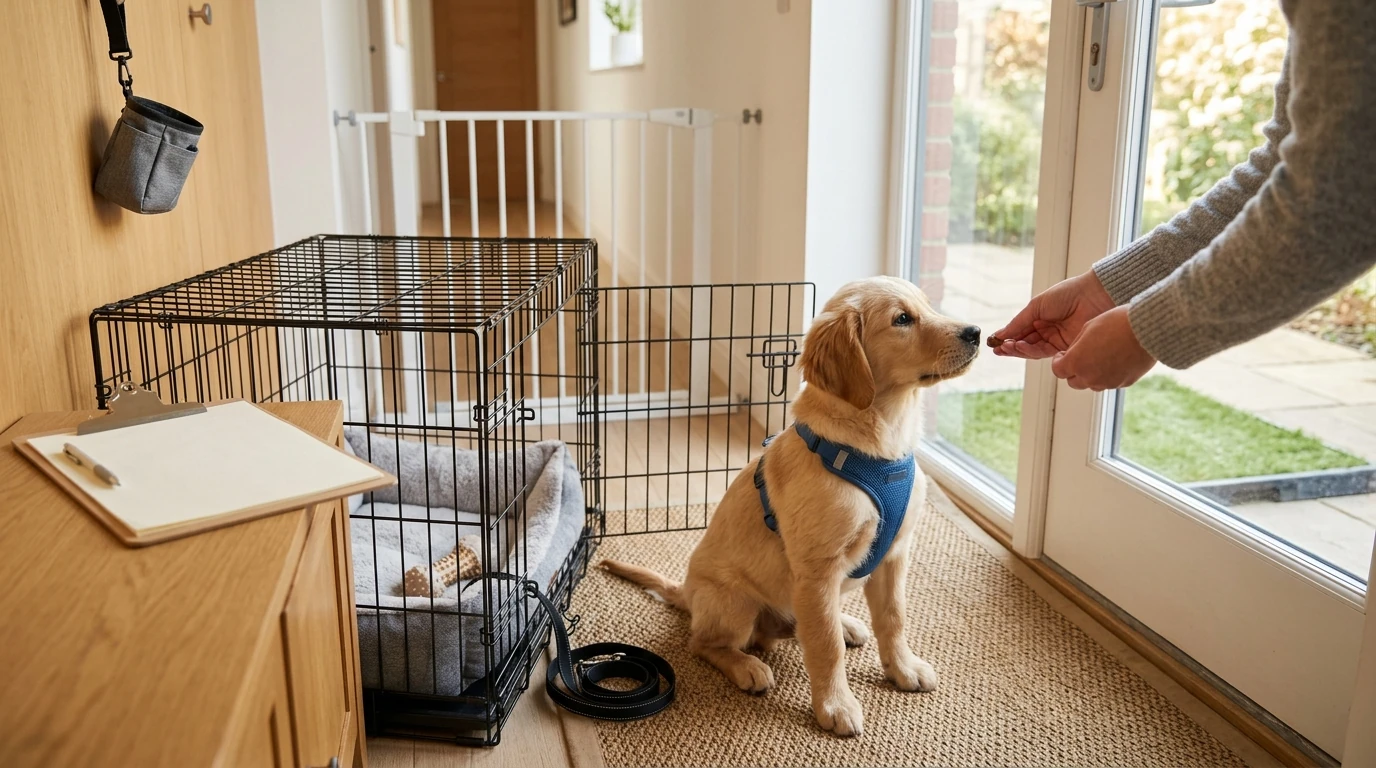
New Puppy Training Starter Guide: A 4-Week Routine for House-Training, Basic Commands, and Socialization
A new puppy learns fastest with short sessions, predictable routines, and consistent rewards. The goal for the first month isn’t perfection—it’s building clear patterns your puppy can repeat daily: potty outside, calm time in a crate or pen, a handful of cues that prevent chaos, and safe socialization that grows confidence instead of fear.
What to Set Up Before Training Starts
Strong training starts with smart setup. When the environment is consistent, your puppy makes fewer mistakes—and you get more chances to reward the behaviors you want.
- Choose one potty door and one outdoor potty spot. Using the same exit and area speeds up the “this is where we go” connection.
- Pick a reward your puppy actually cares about. Tiny soft treats often work best; kibble can cover easy reps; a favorite toy can motivate play-driven pups.
- Gather management tools. A crate or exercise pen, baby gates, a chew assortment, enzymatic cleaner, leash + harness, and a treat pouch reduce “oops” moments.
- Decide household rules now. Couch access, sleeping location, feeding schedule, and who handles potty trips should be clear so the puppy doesn’t get mixed messages.
- Plan for naps. Overtired puppies get mouthy and scattered; frequent rest breaks often solve “training problems” that are really “sleep problems.”
House-Training: The Daily Pattern That Prevents Accidents
House-training improves fastest when you rely on timing and supervision—not correction. A simple rhythm prevents most accidents before they happen.
- Go out on a schedule: after waking, after eating/drinking, after play, after training, and before bed.
- Add a cue like “Go potty,” then reward immediately after your puppy finishes. Calm praise on the way back inside reinforces the full sequence.
- Supervision beats correction. If you can’t watch your puppy, use a crate/pen or tether to keep them from sneaking off to potty.
- If an accident happens: interrupt gently (no scolding), take your puppy outside, then clean indoors with an enzymatic cleaner to remove odor cues.
- Nighttime is part of training. Use an alarm for a quick, boring potty trip; gradually extend time between trips as reliability improves.
For step-by-step tracking that keeps everyone consistent, use a structured weekly routine like the New Puppy Training Starter Guide (printable 4-week routine).
Crate and Alone-Time Skills Without the Stress Spiral
Crate training isn’t about “toughing it out.” It’s about teaching your puppy that alone-time is safe, predictable, and temporary.
Foundational Commands That Make Everyday Life Easier
For additional training fundamentals and milestones, the American Kennel Club’s puppy training basics is a reliable reference.
Socialization: Confidence, Not Overwhelm
- Aim for variety, not intensity: surfaces, sounds, people types, gentle handling, and calm dogs at your puppy’s pace.
- Watch body language: loose tail and soft eyes signal comfort; freezing, tucked tail, or frantic pulling means it’s too much.
- Try “look at that” rewards: treat your puppy for noticing something new calmly before fear escalates.
- Keep it brief: multiple 3–5 minute exposures beat one long stressful outing.
- Prioritize safety: talk with your veterinarian about low-risk areas; the AVSAB position statement on puppy socialization is a helpful overview of balancing health and behavior needs.
A Simple 4-Week Starter Routine (Adjust to Your Puppy’s Age and Energy)
Week-by-week focus
Sample Day Schedule (Modify for Your Puppy’s Needs)
| Time | What to Do | Goal |
|---|---|---|
| Morning (wake-up) | Potty trip, short sniff, breakfast, quick training (2–3 min) | Prevent accidents; build routine and focus |
| Mid-morning | Play (5–10 min), potty, crate/pen nap | Healthy energy outlet; teach settling |
| Midday | Potty, leash practice indoors, calm handling, lunch (if applicable) | Foundation skills; positive touch |
| Afternoon | Socialization exposure (3–5 min), potty, nap | Confidence without overwhelm |
| Evening | Potty, short walk/sniff, basic cues, dinner, calm chew | Real-life practice; decompression |
| Bedtime | Potty, quiet crate routine, lights out | Improve sleep patterns and night cleanliness |
Printable Support for Consistency and Progress Tracking
- Use checklists that cover potty timing, crate steps, command practice, socialization exposures, and weekly goals.
- Try one page per week: mark successes, note triggers for accidents or biting, and adjust the next week’s difficulty.
- Product option: New Puppy Training Starter Guide | Printable Puppy Training eBook for Beginners | 4-Week Puppy Routine, House-Training, Commands, Socialization & More.
If you’re also building household routines beyond puppy care, these printables can help support consistency at home: Budgeting Like a Pro: Complete eBook – Personal Finance Planner and Confident Kids Bundle: Nurturing Emotional Strength.
FAQ
How often should a puppy go outside for potty training?
Take your puppy out after waking, after meals or drinks, after play, after training, and before bed. Very young puppies often need extra trips and usually benefit from one or more brief nighttime potty breaks at first.
What if my puppy has accidents even after a week of training?
Common causes include too much freedom, missed timing, and not fully removing odor with an enzymatic cleaner. Tighten management with a crate/pen or tethering, increase potty frequency, and contact your vet if you notice diarrhea, frequent urination, straining, or sudden regression.
When can a puppy start socializing in public safely?
Socialization is time-sensitive, but health risks vary by area, so get guidance from your veterinarian. You can prioritize low-risk exposure (carrying your puppy, observing from a distance, visiting clean homes, controlled puppy classes) instead of random dog greetings in high-traffic spots.











Leave a comment