Future Mapping: Create a Clear Life Vision in Weeks
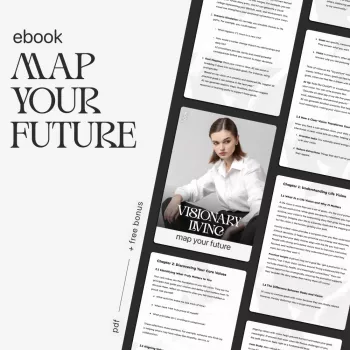
Visionary Living: Map Your Future — a practical way to get clear on what you’re building
A clear life vision turns “someday” into a direction you can plan, measure, and actually live. Visionary Living: Map Your Future (Digital eBook) is designed to help you define what matters most, translate it into meaningful goals, and build a personal roadmap that fits real life—work, relationships, health, money, and growth.
Instead of relying on vague motivation, it supports a grounded process: values first, then a future picture, then milestones and weekly actions. The result is a plan you can revisit and refine as your life changes.
What a “life vision” really is (and what it isn’t)
A life vision is a values-based direction that guides choices. It’s not a rigid five-year script that falls apart the moment life gets complicated. A useful vision balances aspiration and realism: it’s meaningful and specific enough to act on, but flexible enough to adapt when your season changes.
It also helps to separate three layers that often get mixed together:
- Vision: the destination and the identity you’re growing into.
- Goals: measurable milestones that prove you’re moving in the right direction (the American Psychological Association describes a goal as an “aim” or “desired outcome”).
- Habits: the daily/weekly engine that makes progress inevitable.
When a vision is missing, a few patterns show up fast: constant comparison, scattered priorities, starting strong then stalling, and a hard time saying no—even to “good” opportunities.
For context on how people define a good life beyond checklists, the Stanford Encyclopedia of Philosophy’s overview of well-being is a helpful reference point for thinking about what “better” actually means.
Who this digital guide supports best
This guide tends to click for people who want structure without feeling boxed in—especially when they’re ready to make choices that align with their own values.
- People in transition: a new career direction, relocation, graduation, breakup, becoming a parent, or an empty-nest shift.
- High-achievers who feel productive but not fulfilled: busy days, strong outputs, but priorities that don’t match personal values.
- Anyone rebuilding confidence after burnout: a gentler, structured way to plan forward without relying on willpower.
- Self-growth readers who want a repeatable process: prompts and a framework, not just inspiration.
A simple framework for mapping your future
“Future mapping” works best when it’s simple enough to use weekly, but complete enough to cover your whole life. The framework inside Visionary Living: Map Your Future (Digital eBook) follows a straightforward sequence:
- Start with values: identify 5–7 core values and define what each looks like as daily behavior.
- Clarify roles and seasons: partner, parent, professional, creator, caregiver—then decide what “enough” means right now.
- Choose focus areas: health, career, relationships, finances, learning, spirituality, community, fun, environment.
- Translate vision into milestones: pick 1–3 priority outcomes per focus area for the next 6–12 months.
- Design next actions: turn milestones into weekly actions and daily habits with clear triggers and tracking.
Vision Mapping Snapshot
| Step | Purpose | Output |
|---|---|---|
| Values | Define what matters most | A short values list with personal definitions |
| Future picture | Create a compelling direction | A paragraph describing the life being built |
| Focus areas | Prevent overwhelm and scope creep | 5–8 areas that cover the whole life |
| Milestones | Make the vision measurable | 1–3 milestones per focus area (6–12 months) |
| Weekly plan | Convert goals into execution | Weekly actions, deadlines, and a review ritual |
If you like frameworks grounded in human motivation, Self-Determination Theory emphasizes autonomy, competence, and relatedness as core needs—useful cues for building a plan that feels self-driven rather than forced (overview: University of Rochester: Self-Determination Theory).
How Visionary Living: Map Your Future is designed to be used
This isn’t the kind of eBook you read once and forget. It’s built to be practical and revisitable.
- Read once for the big picture, then return as a working reference during weekly or monthly planning.
- Complete exercises in short sessions (15–30 minutes) to reduce procrastination and decision fatigue.
- Use it as a quarterly reset: update values, revise milestones, and remove goals that no longer fit.
- Pair it with a journal or notes app so insights, decisions, and next actions stay together.
- Keep language personal and concrete: replace “be happier” with “sleep 7.5 hours, see friends weekly, and protect weekends twice per month.”
Common obstacles—and how to move past them
Making the vision stick: reviews, tracking, and course-correction
Related guides that pair well with future mapping
- Money clarity: When money stress blurs priorities, Budgeting Like a Pro (Complete eBook) can help free up mental bandwidth and make goals more achievable.
- Relationship stability: When conflict consumes energy, Conflict-Resolution Workbook for Couples (Printable eBook) supports healthier communication so your growth plans don’t happen on shaky ground.
- Parenting season support: If family life is a major focus area right now, Confident Kids Bundle: Nurturing Emotional Strength (3-in-1 Bundle) can help align daily parenting choices with long-term values.
Quick start plan (60 minutes to a first draft vision)
FAQ
How is a life vision different from a goal list?
A life vision sets your overall direction and the kind of person you’re becoming, while goals are measurable milestones along the way. Habits are the daily and weekly behaviors that make those goals happen consistently.
What if the vision changes after starting the plan?
Change is normal, especially after you gather real-world feedback. Keep your values as the anchor, then adjust milestones during monthly or quarterly reviews so the plan stays aligned with your current season.
Is this eBook useful if motivation is inconsistent?
Yes—because it’s built around structure, small sessions, and repeatable routines instead of waiting to “feel motivated.” Tracking actions (what you did) is more reliable than tracking moods (how you felt).










Leave a comment