Daily Wellness Checklist: Physical Habits for Better Mood
Boost Your Mental Health Through Physical Habits: A Daily Wellness Checklist and Self-Care Planner
Mental well-being is strongly influenced by everyday physical routines: sleep, movement, hydration, nutrition, light exposure, and simple body-based calming practices. A consistent checklist makes those basics easier to remember, track, and turn into automatic habits—especially on stressful days when motivation is low. When the body gets steadier inputs, the mind often becomes less reactive, more focused, and more resilient.
Why physical habits shape mental well-being
Emotions don’t happen in a vacuum. Your nervous system responds to sleep, blood sugar, hydration, muscle tension, and light cues all day long—often before you’ve consciously “decided” how you feel.
- Sleep quality supports mood regulation and focus. A rough night can lower stress tolerance the next day, making small problems feel much bigger.
- Movement helps discharge stress. Even light activity can reduce tension and support steadier energy. For general guidance on adult activity, see the CDC recommendations.
- Hydration and steady meals reduce “false alarms.” Fatigue, headaches, irritability, and brain fog can be worsened by low fluids or long gaps between meals.
- Sunlight and outdoor time anchor your circadian rhythm. Morning light exposure can improve daytime alertness and make nighttime wind-down easier.
- Small body-based resets signal safety. A few minutes of slower breathing or gentle stretching can reduce stress reactivity and help you respond instead of snap.
Stress also shows up physically—tight shoulders, a clenched jaw, shallow breathing. Understanding that mind-body loop can make self-care feel more practical and less abstract. The American Psychological Association explains how stress affects the body in ways many people recognize immediately.
Start small: choose 3 “non-negotiables” for the next 7 days
If you want a routine that survives busy weeks, start with actions you can complete even on a hard day. The goal is not perfection—it’s building reliability.
- Pick three easy wins. Examples: a 10-minute walk, two full water bottles, lights out by a set time.
- Tie each habit to something you already do. After brushing teeth, after lunch, before the first meeting, or right after dropping kids off.
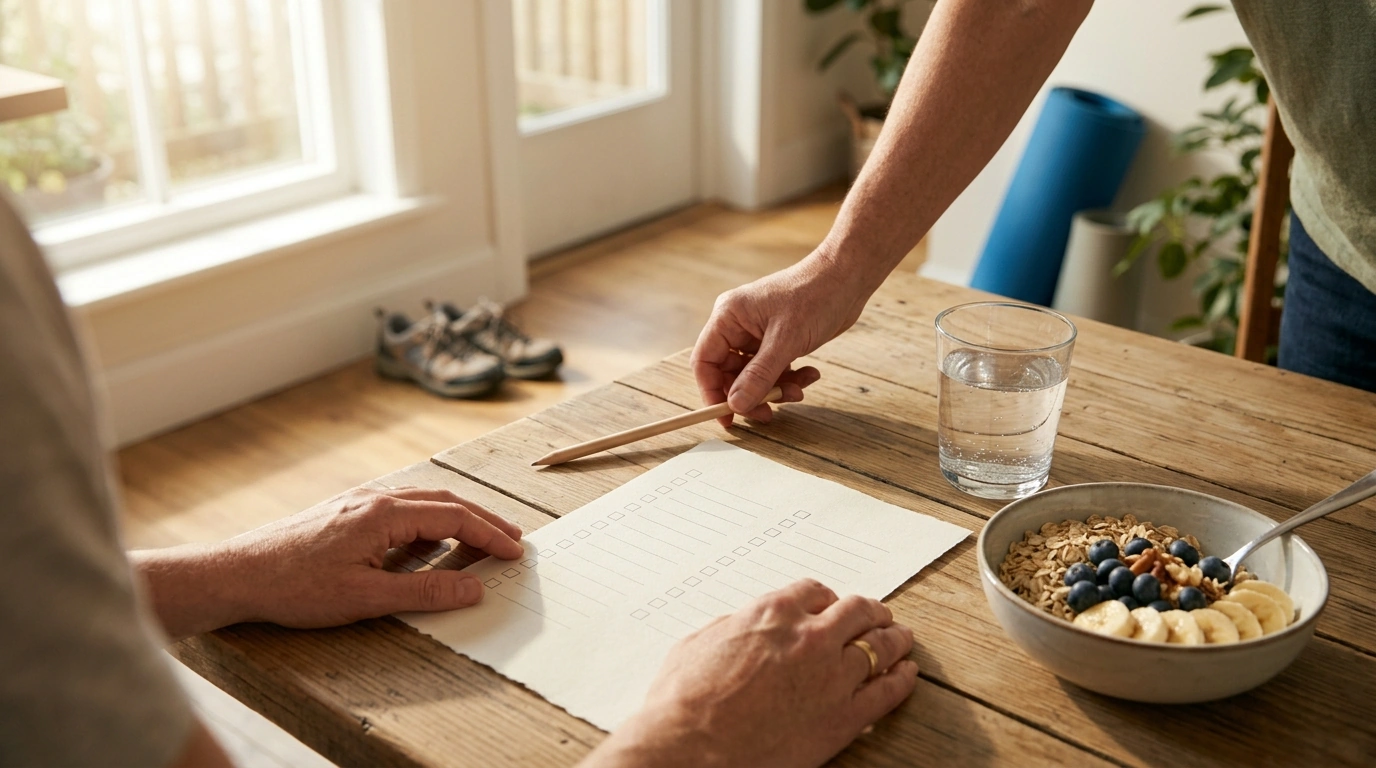
- Make the habit visible. A checklist on the fridge, a planner on the desk, or a phone reminder paired with a printed tracker.
- Prioritize consistency over intensity. You can level up later; stable basics come first.
- If you miss a day, restart at the same small level. Avoid “making up” with extreme goals that backfire.
Printable daily wellness checklist (example layout)
A one-page checklist works best when it’s a quick scan: body basics first, calming actions next, then a short reflection. Keep items measurable (minutes, servings, number of glasses) to reduce decision fatigue. Add an “optional” section for days you have extra capacity—so you don’t fall into all-or-nothing thinking.
| Category | Habit | Goal | Check |
|---|---|---|---|
| Sleep | Consistent bedtime/wake time | Within a 60-minute window | ☐ |
| Hydration | Water intake | 6–10 cups (adjust as needed) | ☐ |
| Movement | Walk / mobility / workout | 10–30 minutes | ☐ |
| Nutrition | Balanced meals | Protein + fiber at 1–2 meals | ☐ |
| Light & air | Outdoor time or bright light | 10 minutes early day | ☐ |
| Downshift | Breathing or stretch break | 2–5 minutes | ☐ |
| Connection | Supportive message or check-in | 1 reach-out | ☐ |
| Reflection | Mood/energy note | Rate 1–10 + one sentence | ☐ |
Want a ready-to-print version with structured pages and prompts? The Boost Your Mental Health Through Physical Habits | Printable Daily Wellness Checklist & Self-Care Planner (Digital Guide) is designed to make these basics simple to follow and easy to repeat.
Body-based habits that calm the nervous system fast
These resets are meant to be quick, low-effort, and repeatable—especially when you feel edgy, overwhelmed, or “stuck” in stress mode.
- Breathing reset (2–3 minutes): inhale for 4 seconds, exhale for 6–8 seconds. Longer exhales can help shift the body toward calm.
- Progressive muscle relaxation: gently tense and release major muscle groups (hands, shoulders, jaw, legs) to reduce physical tension.
- Micro-mobility (60–90 seconds): roll neck/shoulders, open the chest, loosen hips to interrupt stress posture.
- Temperature shift: cool water on the face or a short cool rinse can help some people reduce acute stress sensations.
- Digital boundaries: a 30–60 minute screen-free buffer before sleep supports a more natural wind-down.
Make it stick: habit stacking, environment design, and gentle tracking
Use a planner to turn routines into a self-care system
If relationship stress is part of what overloads your nervous system, pairing personal routines with communication tools can help. The Conflict-Resolution Workbook for Couples offers practical exercises to improve listening, reduce escalation, and rebuild trust—so your “calm habits” have more room to work.
For broader mental health guidance and self-care basics, the National Institute of Mental Health provides an overview of supportive steps and when to seek professional help.
FAQ
How long does it take for physical habits to improve mood?
Some benefits—like better energy from hydration, a short walk, or a more consistent sleep schedule—can show up within days. More stable changes often take several weeks, so tracking a simple mood/energy rating can help you notice progress you might otherwise miss.
What if motivation is low and the checklist feels like too much?
Scale down to “minimum viable” habits: 2–5 minutes of breathing or stretching, one glass of water, or a short walk to the mailbox. Keep only three essentials for a week and treat “done” as the win—then build back up when capacity returns.
Can a wellness checklist replace therapy or medical care?
No. A checklist can support daily well-being, but it doesn’t replace professional care for persistent or severe symptoms. If you’re struggling to function, having thoughts of self-harm, or feeling unsafe, seek immediate help from local emergency services or a qualified mental health professional.










Leave a comment