Resilience to Stress Checklist: Build Emotional Strength

Resilience to Stress: A Practical Checklist for Emotional Strength and Mental Wellness
Stress is unavoidable, but feeling stuck, overwhelmed, or reactive doesn’t have to be the default. Resilience is a set of learnable skills that helps the nervous system recover, the mind reframe challenges, and daily habits stay steady under pressure. A checklist turns resilience into simple, repeatable actions—so progress can be tracked, strengthened, and sustained.
What resilience looks like in everyday life
Resilience isn’t “being tough” all the time. It’s the ability to come back to center—more often and more quickly—even when life stays demanding.
- Recovering faster after setbacks (shorter emotional “aftershocks”)
- Staying connected to values and priorities even when busy or anxious
- Thinking flexibly: moving from “this is impossible” to “what’s one step?”
- Maintaining supportive routines (sleep, meals, movement) during hard weeks
- Reaching out for help sooner rather than isolating
- Using healthy coping tools instead of only distraction or avoidance
Quick self-check: stress signals that often get ignored
Resilience improves when stress is noticed earlier. Many people wait for burnout-level symptoms before making changes. Use this as a quick scan.
- Body: tension headaches, jaw clenching, stomach issues, changes in appetite, fatigue that doesn’t match effort
- Mind: racing thoughts, brain fog, forgetfulness, harsh self-talk, catastrophizing
- Emotions: irritability, numbness, sudden tears, heightened defensiveness
- Behavior: procrastination, doom-scrolling, overworking, withdrawing, snapping at others
- Sleep: trouble falling asleep, waking often, waking unrefreshed
- If symptoms feel intense, persistent, or unsafe, consider professional support alongside self-guided tools.
For additional guidance on coping strategies and when to seek help, see the National Institute of Mental Health’s overview on coping with stress and the American Psychological Association’s guidance on building resilience.
The resilience checklist approach (why it works)
- Turns vague goals (“handle stress better”) into observable actions
- Builds momentum through small wins and consistency
- Separates controllables (habits, boundaries, coping skills) from non-controllables (other people’s reactions, timing)
- Creates a feedback loop: notice → choose → reflect → adjust
- Supports emotional regulation by pairing mindset tools with body-based strategies
Think of the checklist as a “minimum effective dose” plan: not a full life overhaul, but a steady set of moves that make hard days less chaotic.
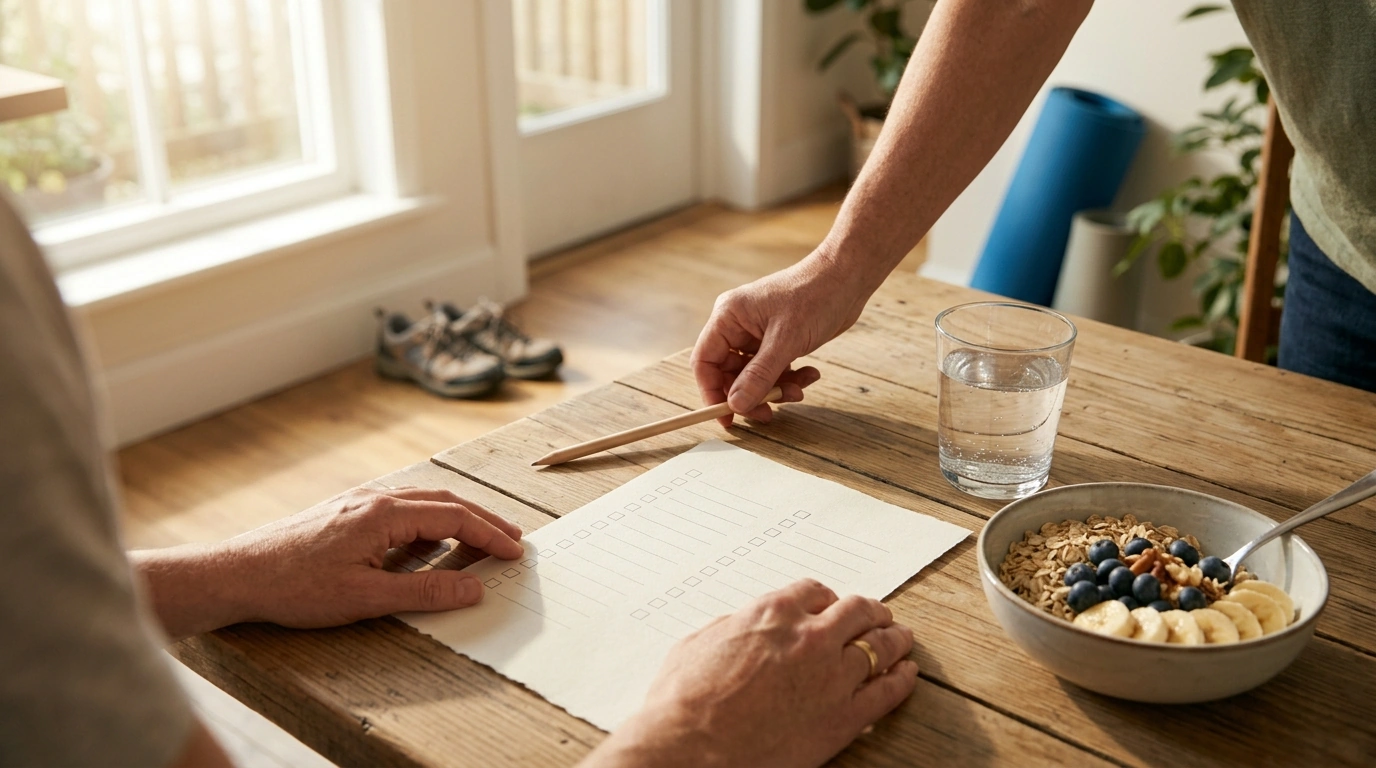
How to use a printable resilience checklist (10 minutes a day)
- Pick a time anchor: morning planning or evening reset (keep it consistent for two weeks)
- Rate current stress level (0–10) and name the main stressor in one sentence
- Choose 1–2 coping actions for today (not a full overhaul)
- Schedule the actions: attach to an existing routine (after coffee, after lunch, before bed)
- End with a 30-second reflection: “What helped?” and “What will be different tomorrow?”
- Print multiple copies for a weekly view, or keep a small binder for patterns over time
10-minute daily resilience routine
| Minute | Action | Goal |
|---|---|---|
| 1 | Stress rating (0–10) + identify the stressor | Clarity |
| 2 | Name the feeling + where it shows up in the body | Awareness |
| 3 | Pick 1 coping tool for the mind and 1 for the body | Balance |
| 2 | Decide when you’ll do them (time + trigger) | Follow-through |
| 2 | Write one boundary or one ask-for-help step | Support |
| 0.5 | Note a win from today (even small) | Confidence |
| 0.5 | One sentence plan for tomorrow | Continuity |
Core skills that build resilience (a personal growth checklist)
Resilience grows faster when the checklist includes both body-based regulation and practical thinking tools.
Resilience tools by situation
| Situation | Fast tool (1–3 min) | Follow-up tool (10–30 min) |
|---|---|---|
| Racing thoughts | Box breathing or 4–7–8 breathing | Brain-dump list + prioritize top 1–3 |
| Irritability and snapping | Cold water on face or brief grounding | Repair conversation + boundary reset |
| Overwhelm and shutdown | Name 5 things you see/hear/feel | Break task into the smallest next action |
| Worry about the future | Write the worry in one sentence | Two-column list: controllable vs. not controllable |
| Low motivation | 2-minute start rule | Pomodoro (25/5) + reward plan |
A simple weekly plan to grow emotional strength
If stress feels constant, consider broader wellness supports alongside daily skills (sleep, movement, and social connection). The World Health Organization’s mental health overview summarizes why strengthening protective habits matters at every life stage.
Printable guide option: ready-to-use checklist for building resilience
For a ready-to-use format, explore Resilience to Stress: Personal Growth Checklist (Printable PDF) for daily prompts that make follow-through easier when energy is low.
Stress can also show up most intensely in relationships and family dynamics. If arguments escalate quickly, Conflict-Resolution Workbook for Couples supports calmer communication and repair. For parents building these skills early at home, Confident Kids Bundle: Nurturing Emotional Strength offers age-appropriate emotional tools and activities.
FAQ
How long does it take to build resilience to stress?
Many people notice small improvements in 2–4 weeks when they practice one or two skills consistently. Stronger, more automatic habits often take 8–12 weeks, especially when tracking progress daily with a checklist.
What should be on a personal resilience checklist?
Include a quick regulation tool (breathing/grounding), sleep and movement basics, one cognitive reframe prompt, one boundary action, a specific social support step, and a 30-second reflection to spot what’s working.
Can a printable PDF help with mental wellness routines?
Yes—printables reduce friction by telling you exactly what to do when you’re stressed, and they make progress visible with simple checkboxes. Using it daily and reviewing weekly patterns helps you adjust the routine instead of starting over.











Leave a comment