Vacuum Stress in Pets: Calm Training for Dogs & Cats
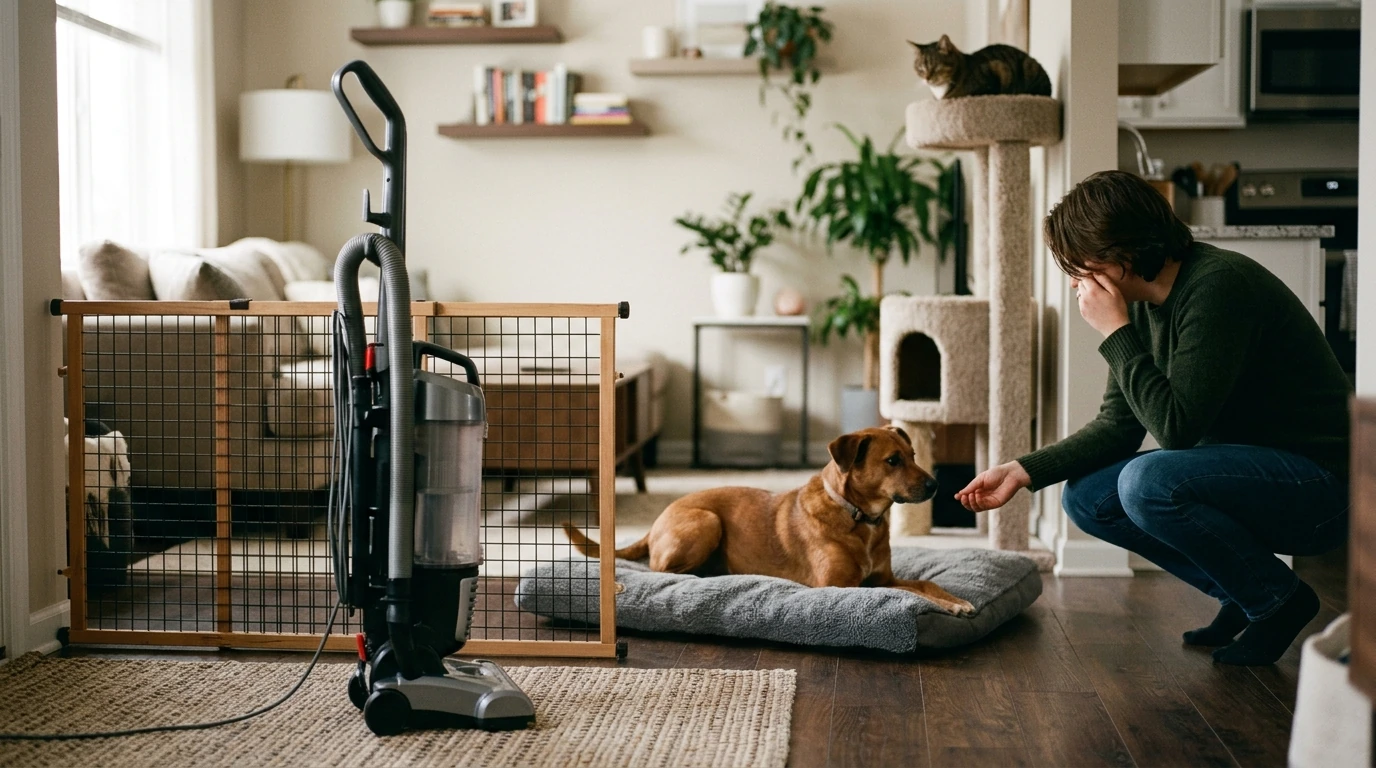
Helping Pets Handle Vacuum Stress: A Calm, Practical Plan for Dogs and Cats
Many pets react to vacuums with fear, barking, hiding, or even lunging—often because of noise, vibration, sudden movement, and past surprises. The goal isn’t to “make them tolerate it,” but to teach predictable, safe routines and gradually build positive associations so cleaning can happen without panic. For more guidance, see Fearful dogs | Cornell University College of Veterinary Medicine.
Why vacuums stress pets
To a dog or cat, a vacuum can feel like a loud, fast-moving object with no clear “rules.” Understanding the most common triggers makes it easier to change the experience. For further reading, see Adopting an under-socialized dog – Humane Colorado.
- Noise sensitivity: High volume and sharp pitch can feel threatening, especially in smaller rooms where sound bounces.
- Movement and unpredictability: Vacuums roll, pivot, and approach quickly—often reading like a “chasing” trigger.
- Vibration and airflow: Floor vibration plus the sensation of air movement can add another layer of discomfort.
- Learning history: One scary incident (cornering, bumped tail, sudden start) can create lasting fear.
- Common stress signals: Tucked tail, ears back, whale eye, pacing, panting, trembling, hiding, growling, swatting, or frantic zooming.
If your pet shows sustained fear or panic around household noise, it may help to review broader fear and anxiety guidance from the AVMA and the ASPCA.
Set up a safer vacuum routine before training
Management comes first. A good setup prevents rehearsing fear behaviors and gives training a better chance to stick.
- Create a reliable “safe zone” (bedroom, crate, cat tree room) away from the cleaning path; add white noise or calming music.
- Use a barrier: Baby gate for dogs; closed door for cats; avoid any situation where your pet feels trapped in a corner.
- Reduce intensity: Start with the lowest suction/noise setting if available; vacuum when the home is otherwise quiet.
- Add predictability: Pick a consistent time and do short sessions rather than long, chaotic cleaning blocks.
- Protect sensitive pets: Keep extra distance for seniors, hearing-sensitive pets, and those with anxiety; avoid forcing proximity.
If you want a structured, easy-to-follow routine, the Helping Pets Handle Vacuum Stress guide can help you set up a calmer plan and track progress without rushing steps.
A step-by-step desensitization plan (short sessions, big wins)
The rule of thumb is simple: stay below the fear threshold. If your pet is fleeing, freezing, or reacting intensely, that step is too hard. Back up to the last “easy win” and repeat it until your pet looks relaxed.
Step 1: Vacuum off, stationary
Place the vacuum in view at a distance. Reward calm looks or sniffing with high-value treats (tiny pieces; rapid delivery). End the session while your pet is still comfortable.
Step 2: Vacuum off, small movement
Roll it a few inches, then stop and treat. Keep the movement small and predictable—no sudden pivots toward your pet.
Step 3: Sound at a distance
Turn it on briefly in another room for 1–3 seconds. Treat during the sound, stop the vacuum, and pause. Repeat a few times, then end the session.
Step 4: Sound + distance gradually reduced
Over days, move the sound source a little closer while keeping sessions short (often 2–5 minutes). Your pet should be able to eat treats and recover quickly.
Step 5: Real vacuuming in tiny zones
Vacuum a small area while your pet remains comfortable in the safe zone. Reward afterward. Gradually increase the size of the “vacuumed zone” over multiple sessions.
| Stage | What the vacuum does | What the pet does | Reward and goal |
|---|---|---|---|
| 1 | Off, parked | Looks/sniffs from a distance | Treat for calm; goal: neutral curiosity |
| 2 | Off, moves a few inches | Stays relaxed (soft body, normal breathing) | Treat after each move; goal: no startle response |
| 3 | On in another room for 1–3 seconds | Eats treats, can disengage and relax | Treat during sound; goal: sound predicts good things |
| 4 | On, gradually closer over multiple days | Minimal concern; can choose to move away calmly | Treat + choice to retreat; goal: comfort at typical distance |
| 5 | Normal vacuuming in small sections | Stays in safe zone or relaxed nearby | Reward after each short section; goal: routine without panic |
What to do during vacuuming day-to-day
Once training is underway, these habits reduce surprises and keep the routine “readable” for your pet.
If your household is busy, it can also help to create family-wide consistency around cues and calm routines. The Confident Kids Bundle: Nurturing Emotional Strength can support calmer daily patterns that make pet routines easier to maintain.
Helpful supports (and what to avoid)
When reactions are severe: safety and professional help
Compare related options such as Discover What Truly Motivates You | Self-Discovery & Personal Growth Guide | Find Clarity and Learn How to Tell What Actually Motivates Me to match features, dimensions, and use case before choosing.
FAQ
Should a pet be kept in the same room to “get used to” the vacuum?
No—forced exposure often increases fear. Use distance, a safe zone, and gradual desensitization paired with rewards so your pet can stay under threshold and feel in control.
How long does vacuum desensitization usually take?
It varies from a few days to several weeks (or longer) depending on how intense the fear is and how consistent the routine stays. Short, frequent sessions that never trigger panic usually move faster than occasional long sessions.
What if a pet barks or attacks the vacuum every time it turns on?
Start with immediate management (separate room or gate plus a chew/food puzzle), then work through structured counterconditioning steps starting far below threshold. If there’s repeated lunging, snapping, or any bite risk, involve a veterinarian and a qualified behavior professional for safety.











Leave a comment