Indoor Cat Enrichment: DIY Toys & Daily Play Plan
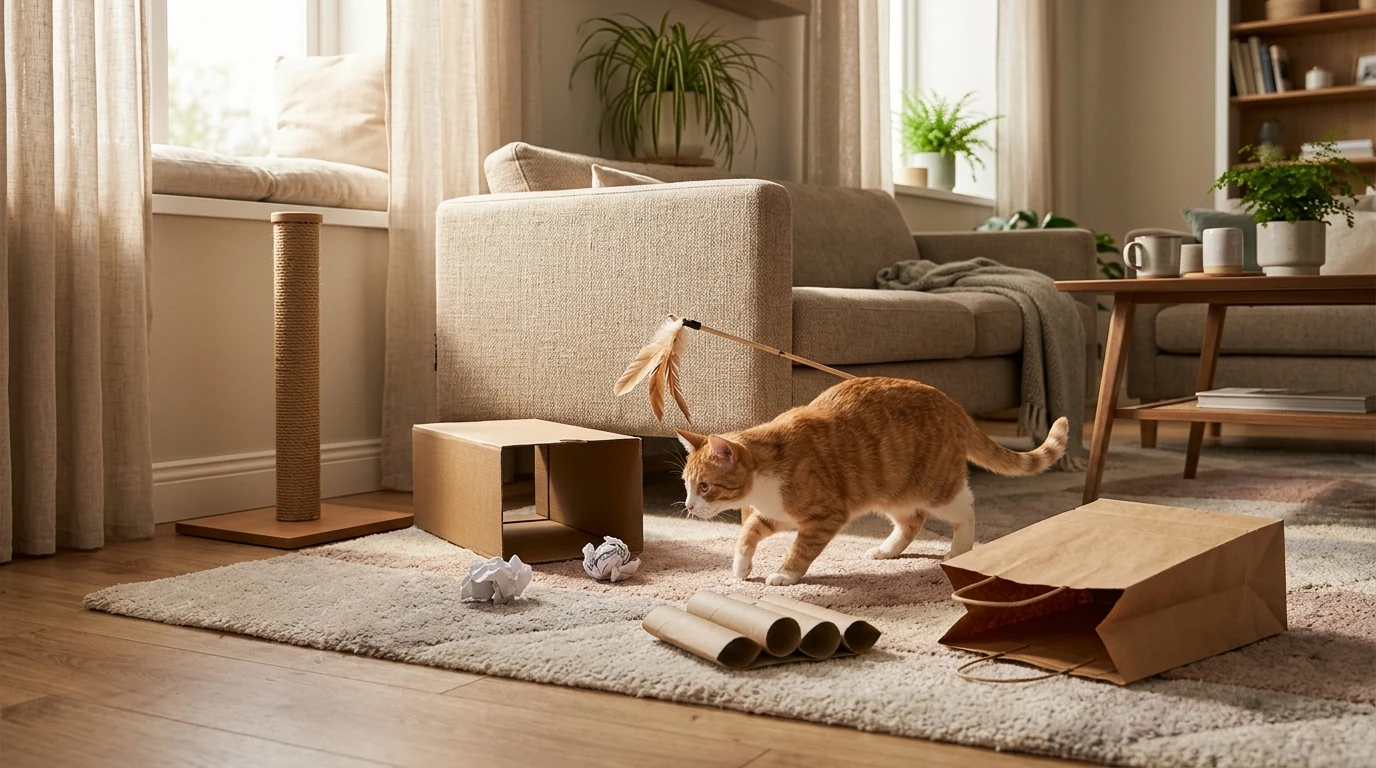
Indoor cats do best when their day has a little “purpose”: chances to stalk, chase, climb, scratch, sniff, and rest in peace. The good news is that enrichment doesn’t have to be complicated or expensive. With a few simple setups, a couple of quick play sessions, and some low-cost DIY toys, you can build a routine that helps prevent boredom behaviors while making your home feel more cat-friendly.
Why indoor enrichment matters
Cats are wired for short bursts of hunting behavior—stalking, pouncing, climbing, scratching, and exploring scents. When those instincts don’t have a safe outlet, they often pop up as late-night zoomies, attention yowling, overgrooming, or scratching furniture. Enrichment also supports healthy weight and muscle tone by adding movement throughout the day, and it builds confidence by giving your cat predictable routines plus multiple “yes” spaces (perches, scratchers, and cozy hideouts).
For deeper guidance on feline environmental needs, the resources from AAFP Cat Friendly Home and International Cat Care are especially helpful.
Start with a simple enrichment baseline
Instead of aiming for a perfect setup, start with a baseline you can actually maintain:
- Play: 2–3 short interactive sessions daily (about 5–10 minutes each) usually beats one long session.
- Vertical + hiding options: Provide at least one vertical spot (cat tree, shelf, sturdy window perch) and one hiding spot (box, covered bed, tunnel).
- Work-for-food moment: Add one daily food puzzle or “hunt for it” task to mimic foraging.
- Toy rotation: Rotate toys weekly to keep novelty high without buying more.
- Scratching stations: Place scratchers near favorite nap areas and near any problem-scratch zones.
DIY enrichment toys using household items
Many effective enrichment toys are already hiding in a recycling bin or junk drawer—just keep safety front and center (no loose strings, remove handles, and discard anything that starts to fall apart).
Quick DIY ideas
- Treat paper roll puzzle: Fold the ends of a toilet paper roll, cut a few small holes, add a few kibble pieces, and let your cat bat it around.
- Box maze: Connect two boxes with a cut-out “door,” add crumpled paper, and create multiple entrances/exits.
- Sock kicker toy: Fill a sock with crinkle material (like clean packaging paper) or fabric scraps, tie off tightly, and supervise if your cat chews.
- Paper bag hunt: Lay a paper bag on its side and drop a toy inside to encourage stalking and pouncing (remove handles first).
- Scent enrichment hide: Rub a small cloth on catnip or silvervine, then hide it under a lightweight blanket for a simple “find it” game.
DIY toy ideas at a glance
| DIY idea | Best for | Time needed | Safety note |
|---|---|---|---|
| Treat paper roll puzzle | Foraging and batting | 5 minutes | Use only if the cat doesn’t shred and eat cardboard |
| Box maze | Exploration and confidence | 10–15 minutes | Remove staples/tape loops; ensure ventilation |
| Sock kicker | Bunny-kicks and wrestling | 5–10 minutes | Avoid strings; supervise heavy chewers |
| Paper bag hunt | Stalking and pouncing | 1 minute | Cut off handles to prevent entanglement |
| DIY wand “lure” (felt strip) | Interactive chase | 5 minutes | Put away after play to prevent ingestion |
Play routines that mimic a hunt
Interactive play works best when it feels like “real prey,” not a frantic blur. A simple pattern keeps sessions effective without exhausting you or overstimulating your cat.
- Act like prey: With a wand toy, do a slow creep, then a quick dart, then “hide” behind furniture and reappear.
- Finish the cycle: End with a small meal or a few treats to complete “hunt → catch → eat.”
- Move away from the face: Keep the lure traveling away from your cat to reduce frustrated swatting.
- Change the puzzle, not the volume: If interest drops, switch speed, direction, or location rather than intensifying.
- Multi-cat tip: Schedule separate sessions sometimes so every cat gets a clear “win” without competition.
Turn mealtimes into enrichment
Food is one of the easiest ways to add daily mental work—especially on busy days when a long play session isn’t realistic.
- Scatter feeding: Toss small portions of kibble across a rug or hallway for a safe “search and find.”
- Puzzle feeders: Start simple and increase difficulty gradually so it stays fun, not frustrating.
- Micro-hunts: Hide a few pieces in 3–5 predictable spots (inside a box, behind a chair leg, on a perch).
- Wet food enrichment: Spread a thin layer on a lick mat to slow eating and add calming licking behavior.
- Consistent timing: Similar meal times help many cats feel secure and less “on edge.”
Cat-friendly home tips that pay off fast
A weekly rotation plan to keep things fresh
Printable guide: make enrichment easy to follow
Recommended printables (digital downloads)
- Enrichment Ideas for Indoor Cats | Printable Cat Enrichment Guide | DIY Toys, Play Routines, and Cat-Friendly Home Tips (Digital download)
- Budgeting Like a Pro: Complete eBook – Personal Finance Planner (Helpful for planning recurring pet costs like litter, food, and vet savings)
- Conflict-Resolution Workbook for Couples | Printable Relationship Communication eBook (Useful if caregivers want clearer routines and fewer misunderstandings around pet care)
FAQ
How much play time does an indoor cat need each day?
Many indoor cats do well with 2–3 short interactive sessions (5–10 minutes each) plus independent options like puzzle feeders and perches. Adjust for age, health, and energy, and stop if you see overstimulation or fatigue.
What are the safest DIY toys for cats?
Choose sturdy materials and avoid loose strings, ribbons, and small pieces that can be swallowed. Remove paper bag handles, supervise heavy chewers, store wand toys after play, and toss anything that becomes damaged.
How can enrichment help with nighttime zoomies?
A predictable evening “hunt-style” play session followed by a small meal often helps many cats settle. Pair that with daytime puzzle feeding and a rotating environment; if the behavior is sudden or extreme, a vet check is a good idea.











Leave a comment